When most people decide to "get fit," their first instinct is to run on a treadmill or buy a stationary bicycle. While cardiovascular exercise is excellent for heart health, cardio alone cannot reshape your body, preserve lean muscle tissue in a calorie deficit, or increase metabolic rate.
Strength training (also known as resistance training) is the true foundation of body recomposition. It signals your body that muscle tissue is essential for survival, forcing your metabolism to burn stored body fat for energy while keeping your shoulders, back, glutes, and core firm and athletic.
At The Unity Fitness, we coach hundreds of local beginners every month. Here is our exact, no-fluff curriculum for building real strength safely from scratch.
The 5 Fundamental Movement Patterns
Instead of memorizing 200 individual muscle isolation exercises, think of human strength as five foundational movement patterns:
1. The Squat (Knee-Dominant Lower Body)
What It Trains: Quadriceps (front of thighs), glutes, and core stability.
Beginner Progression: Bodyweight Air Squats → Goblet Squats holding a light dumbbell against your chest → Barbell Back/Front Squats on a power cage.
2. The Hinge (Hip-Dominant Posterior Chain)
What It Trains: Hamstrings (back of thighs), glutes, erector spinae (lower back muscles), and grip strength.
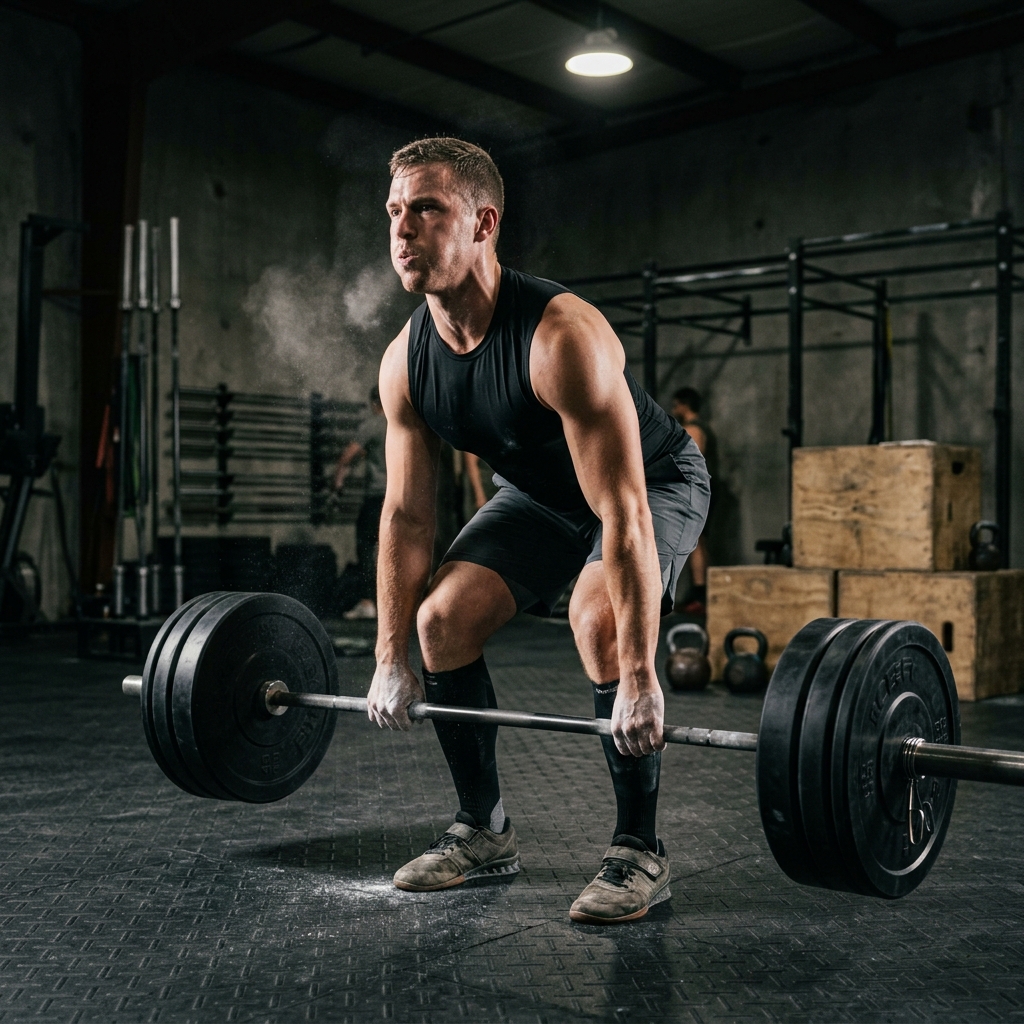
Beginner Progression: Bodyweight Glute Bridges → Dumbbell Romanian Deadlifts (RDLs) → Trap Bar Deadlifts → Conventional Olympic Barbell Deadlifts.
3. The Push (Upper Body Horizontal & Vertical)
What It Trains: Pectorals (chest), anterior deltoids (front shoulders), and triceps.
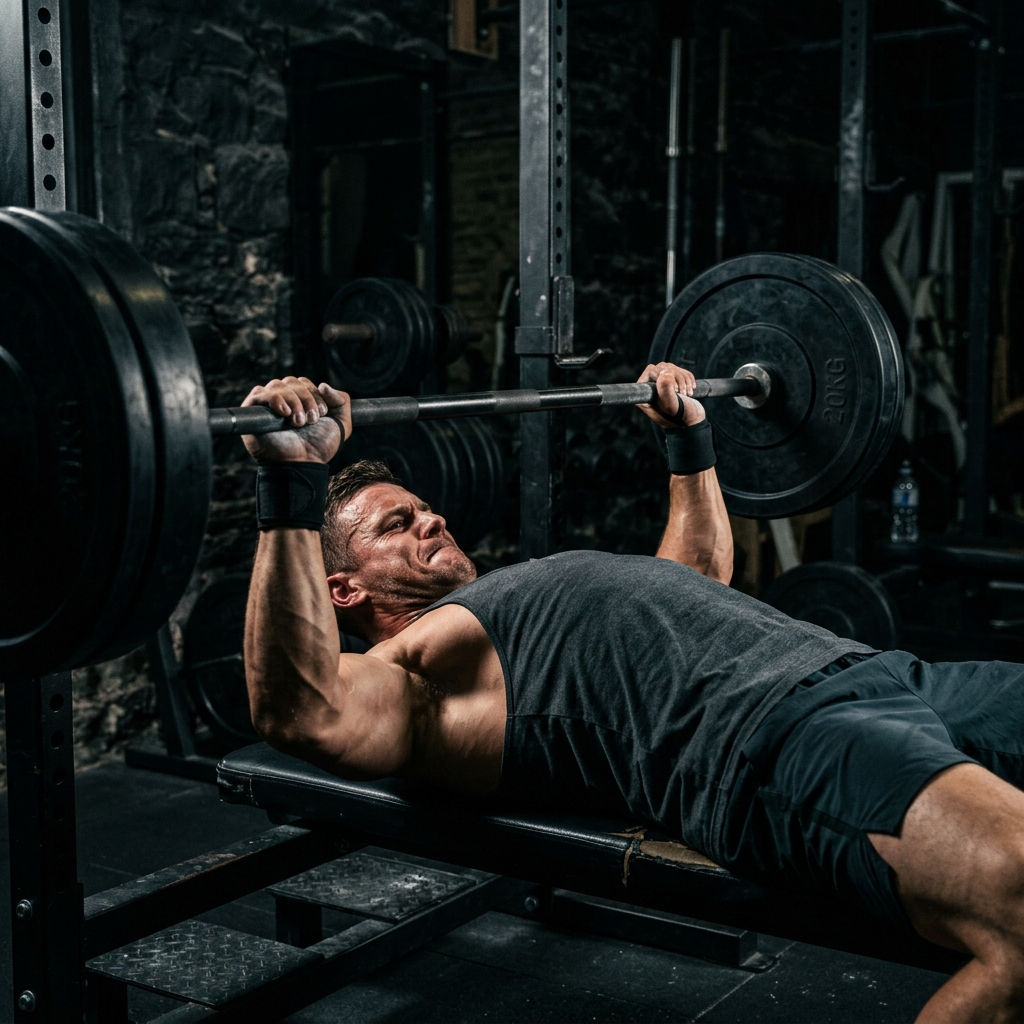
Beginner Progression: Incline Push-ups → Machine Chest Press → Flat Dumbbell Bench Press → Standing Overhead Barbell Press.
4. The Pull (Upper Body Horizontal & Vertical)
What It Trains: Latissimus dorsi (lats/wings), rhomboids (upper back), rear deltoids, and biceps.
Beginner Progression: Chest-Supported Machine Rows → Lat Pulldowns → One-Arm Dumbbell Rows → Assisted Pull-ups.
5. The Carry / Core Brace
What It Trains: Deep transverse abdominis, obliques, forearm grip, and spinal integrity under load.
Beginner Progression: Forearm Plank Holds → Farmer's Walks (carrying heavy dumbbells by your sides while walking with upright posture).
Progressive Overload Explained Without Jargon
Your body has zero interest in building larger or stronger muscles unless you give it a reason to adapt. If you go to the gym and lift the exact same 5kg pink dumbbells for 15 reps every single day for 6 months, your body has no biological stimulus to change.
The Principle of Progressive Overload
To stimulate ongoing strength and muscle development, you must systematically increase the physiological demands placed on your muscular system over time.
You can achieve progressive overload in four simple ways:
- Add Weight: Lifting 15kg for 8 reps this week after successfully completing 12.5kg for 8 reps last week.
- Add Repetitions: Lifting 15kg for 10 reps instead of 8 reps.
- Add Sets: Doing 3 sets instead of 2 sets at the same weight.
- Improve Technique & Tempo: Slowing down the eccentric (lowering) phase to 3 seconds with zero momentum or swinging.
Myth Busting: "Will Lifting Heavy Weights Make Women Bulky?"
This is the single most common misconception heard by our trainers in Virar. Many women spend hours doing light cardio because they fear lifting dumbbells heavier than 3kg will make them look like professional male bodybuilders.
The Biological Reality: Developing massive muscle bulk requires enormous levels of anabolic testosterone, years of dedicated caloric surplus eating (3,000+ calories daily), and extreme progressive weight loads. Female physiology produces a fraction of the testosterone found in men. When women lift challenging weights, they do not get bulky—they develop a toned, firm, lean physique, boost their bone mineral density, and dramatically improve their posture.
Sample 3-Day Beginner Full-Body Routine
For a beginner balancing a busy job and Mumbai local train commutes, three non-consecutive days per week (e.g. Monday, Wednesday, Friday) is the gold standard for muscle recovery and rapid strength gains.
| Workout Day | Exercise | Sets & Reps | Rest Between Sets |
|---|---|---|---|
| Day A (Monday) | Goblet Squat (Dumbbell) | 3 sets × 10 reps | 90 seconds |
| Flat Dumbbell Bench Press | 3 sets × 10 reps | 90 seconds | |
| Lat Pulldown (Neutral Grip) | 3 sets × 10 reps | 90 seconds | |
| Farmer's Walk (Heavy Dumbbells) | 3 sets × 40 meters | 60 seconds | |
| Day B (Wednesday) | Dumbbell Romanian Deadlift (RDL) | 3 sets × 10 reps | 90 seconds |
| Seated Overhead Dumbbell Press | 3 sets × 10 reps | 90 seconds | |
| Seated Cable Row to Abdomen | 3 sets × 10 reps | 90 seconds | |
| Forearm Plank Hold | 3 sets × 30–45 seconds | 60 seconds | |
| Day C (Friday) | Horizontal Leg Press Machine | 3 sets × 12 reps | 90 seconds |
| Incline Dumbbell Chest Press | 3 sets × 10 reps | 90 seconds | |
| One-Arm Dumbbell Row on Bench | 3 sets × 10 reps (each side) | 90 seconds | |
| Standing Dumbbell Bicep / Tricep Superset | 2 sets × 12 reps | 60 seconds |
Recovery: Where Muscles Actually Grow
When you lift weights in the gym, you do not build muscle—you create micro-tears in muscle fibers and deplete cellular glycogen stores. Muscles grow and repair while you are resting outside the gym.
To recover properly:
- Aim for 7 to 8 Hours of Sleep: Growth hormone and tissue repair peak during deep slow-wave sleep.
- Adequate Protein Intake: Aim for approximately 1.2 to 1.6 grams of protein per kilogram of body weight from sources like paneer, tofu, Greek yogurt, dal, eggs, chicken, and whey protein. Use our online fitness calculators to estimate your exact macro breakdown.
- Take Advantage of Heat Therapy: Post-workout steam baths increase blood circulation, helping flush metabolic waste and relax tight muscle tissue.
Learn Proper Barbell Mechanics at The Unity Fitness
Our gym features competition-spec Olympic barbells, calibrated bumper plates, heavy power cages, and certified strength coaches ready to guide your form.